Maine Coons—Gentle Giants: Are They Really Right for Your Home?
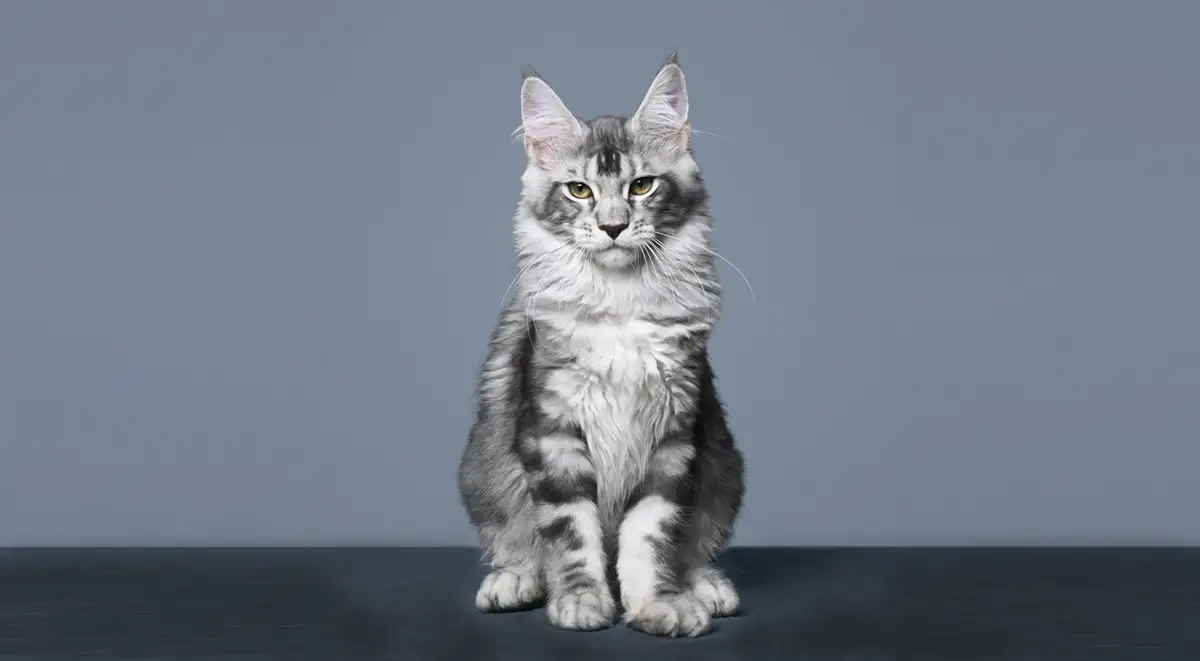
Maine Coons are often described as affectionate “gentle giants,” but individuals vary. I have raised Bella, a British Shorthair; this guide is a summary of breed and veterinary references, not my experience owning a Maine Coon.
If you are considering one, the useful question is whether your home, equipment and budget suit the individual cat you meet.
Maine Coon Size and Weight: Does Your Home Really Have Room for This “Giant Among Cats”?
The Maine Coon developed in the northeastern United States and is a large, semi-longhaired breed.
GCCF’s breed profile gives a broad size guide of 10–20 pounds. This describes a range of cats, not an ideal weight to aim for.
Males are generally larger than females, but build and body condition matter more than trying to reach a breed-table number.
Growth timeline:
- Growth and physical maturity vary between cats
- GCCF describes Maine Coons as slow to mature, taking up to about four years
Plan for the adult cat’s size, not just the kitten’s current footprint.
Space Considerations
Some standard litter boxes and cat trees may be too small or unstable for a large individual. Measure a box’s usable interior, check a tree’s stability and weight limit, and leave room for the cat to turn, stretch, retreat and play. A small flat is not automatically unsuitable if those needs can be met.
Maine Coon Personality: Beneath a Commanding Exterior Lies a “Dog-Like” Soft Soul
Many people who see an adult Maine Coon for the first time mistakenly assume it has an aloof and unapproachable personality.
“Gentle giant” is a familiar breed description, not a promise about every cat.
Intelligence and Emotional Sensitivity
Some Maine Coons learn cues and interactive games readily. There is no validated breed intelligence ranking behind the claim that they are among the smartest cats.
A cat may approach when someone is upset, but that alone does not prove it understands the person’s mood or intends to comfort them.
Balanced Affection
Owners often describe sociable cats that enjoy being nearby. How much contact they want varies:
- Some follow their people around
- Others prefer a nearby resting place rather than a lap
Possible daily companionship:
- Resting near you while you watch a show
- Watching household activity from a safe perch
Unique Vocalisation
Soft chirps and trills are often mentioned in breed descriptions, but Maine Coons can also meow or yowl. Vocal volume is not guaranteed by breed.
Tolerance
A relaxed individual may fit family life well. Introductions and handling still matter: supervise children, provide escape space, and stop when the cat shows discomfort. No breed is guaranteed never to swat or bite.
Maine Coon Cost in the UK: Are You Prepared for Ongoing Care?
I have no Maine Coon bills or current local quotes, so the earlier monthly price table was not a usable budget. Before committing, collect prices for the actual cat and your location:
| Ask for | Why it matters |
|---|---|
| Food label, calories and expected daily amount | A large body does not justify a fixed “breed multiplier”; portions depend on the food and the cat’s condition. |
| Suitable litter box, stable tree and coat-care supplies | Check the dimensions and ongoing replacement costs rather than assuming standard equipment will fit. |
| Veterinary history and an individual care plan | Ask about any recommended HCM or hip screening; breed risk is not a diagnosis. |
| Insurance terms or an emergency reserve | A monthly routine budget does not cover every illness or injury. |
Cats Protection’s feeding guidance bases portions on the cat and food. Cornell’s HCM guide distinguishes genetic risk from diagnosis by cardiac ultrasound; testing frequency should be individual.
Financial Reality Check
Ask local vets about routine fees and how emergency care is charged, then compare insurance exclusions and excesses or plan a reserve. Those quotes will be more useful than a fixed figure from an article.
Is a Maine Coon Right for Me?
After reading the previous sections, you can make a final decision based on your own circumstances.
| If you… | Then a Maine Coon… |
|---|---|
| Have enough space at home for an extra-large litter box and sturdy cat tree | ✅ Could be a good fit |
| Can offer daily play and accept that the cat may not be cuddly | ✅ Could be a good fit |
| Have checked the individual cat’s handling and visitor preferences | ✅ Could be a good fit |
| Have a budget based on actual care quotes and emergency provision | ✅ Could be a good fit |
| Cannot fit an appropriate litter box or stable resting and play areas | ❌ Resolve this before adopting |
| Cannot make time for regular coat care | ❌ Likely not a good fit |
| Haven’t set aside a sufficient pet care budget | ❌ Likely not a good fit |
Final Thought
If you can provide suitable space, care and a realistic budget, a Maine Coon may be a rewarding companion. Meet the individual cat rather than relying on the “gentle giant” promise.
If the equipment, time or costs do not work for your household, resolve that before adopting rather than relying on a nickname to make the choice.