Male vs Female Cats: What Bella and My Friends' Cats Taught Me
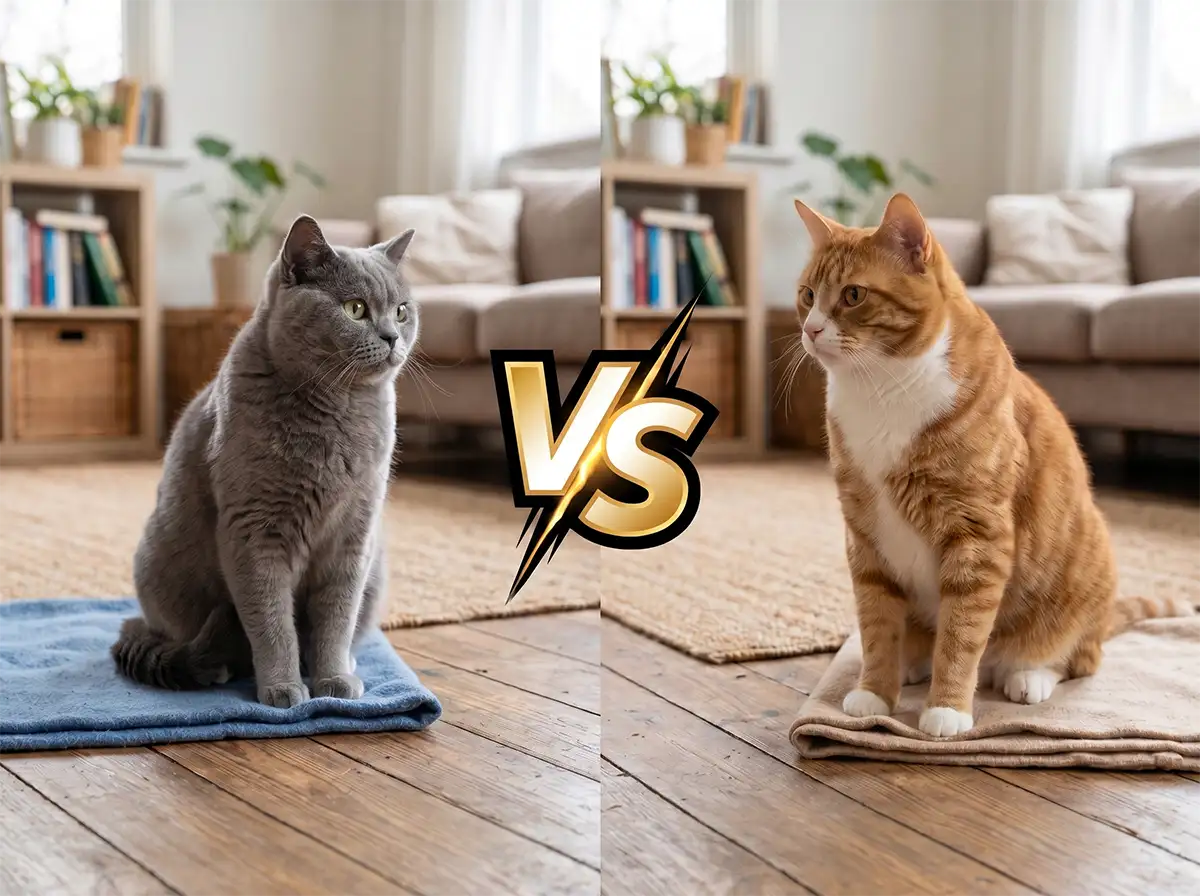
I have only owned one cat. Bella. Female. British Blue.
But I have cat-sat for friends. A lot.
Three male cats. Two females. Different breeds. Different ages.
I have cleaned their litter boxes. Fed them at 5 AM. Dealt with their weird behaviors.
Here is what I noticed while cat-sitting. These few cats differed in age, breed and history, so this is not a controlled comparison of the sexes. Cats Protection recommends choosing the individual. And yes, I smelled things I wish I had not smelled.
Size and Body Type
The males I looked after were larger than Bella. That is an observation about these cats, not a healthy-weight target for either sex.
Male cats
The males I sat for were larger. Broader shoulders. Bigger heads. Thicker necks.
One was a neutered ginger tabby. He weighed 6.5 kg. Solid. Heavy. When he jumped on my chest, I felt it.
Their paws are bigger too. More like small dog paws.
Female cats
Bella looked smaller than the males I cared for. Their sizes were personal observations, not healthy weight targets for all female British Shorthairs.
She has a smaller head. Smaller paws. Narrower shoulders.
She curls into a smaller ball. Fits into smaller boxes.
What this means for you
Males are often larger, but there is overlap. Meet the individual and consider its adult build. Neither sex guarantees a small lap cat—or a cat that enjoys being hugged.
One specific example
Bella sleeps on my pillow. She takes up one quarter of it.
My friend’s male cat slept on my pillow once. He covered the whole thing. I had to move my head to the edge.
I did not sleep well that night.
Scent Marking and Spraying
This is the biggest difference. And the grossest one.
Male cats (neutered)
Most neutered males do not spray. But some do.
My friend’s male cat was neutered at six months. He never sprayed.
Another friend’s male was neutered late. At one year. He sprays sometimes. Not often. But when he does, the smell is strong. Pungent. It lingers.
I had to clean his litter box once. The urine smell was different from Bella’s. Sharper. More aggressive.
Bella’s toileting
Bella does not spray. At all.
She uses her litter box. She covers her waste. That is it.
No marking. No territorial peeing. No smell on my furniture.
What this means for you
Either sex can spray, including after neutering. Cats Protection distinguishes spraying from normal toileting. Neutering can reduce sexually motivated marking, but new indoor spraying warrants a vet check rather than an assumption about sex or habit.
One specific struggle
I sat for a friend’s unneutered male cat. Just for one weekend.
He sprayed on my sofa. Three times.
I cleaned it with enzyme cleaner. The smell went away after two days.
I told my friend: get him neutered.
He did. The spraying stopped.
Lesson learned
Discuss neutering and its timing with the vet for either sex. It can reduce reproductive behaviours without guaranteeing that every spraying problem will stop.
Affection and Clinginess
People say males are more affectionate. Females are more independent.
That is not always true. I have seen both.
Male cats
The males I sat for were more openly affectionate.
They followed me from room to room. Sat on my laptop. Head-butted my hand for pets.
One male cat drooled when he purred. Drooled. On my shirt.
He did not care. He just wanted attention.
Female cats
Bella is affectionate. But on her terms.
She does not follow me. She does not demand pets.
She sits near me. Sometimes she comes to me. Sometimes she ignores me for hours.
The other females I sat for were similar. More reserved. Less needy.
What this means for you
Those were the cats I met, not a reliable way to choose by sex. Either sex can be affectionate or reserved; ask about that cat’s preferences and past experiences.
One specific moment
The drooling male cat sat on my chest for 45 minutes. Purring. Drooling. Staring at me.
It was sweet. But my shirt was soaked.
Bella has never drooled on me. Not once.
I prefer Bella.
Heat Cycles (Before Spaying)
I never dealt with Bella in heat. I cannot establish her neutering status at adoption without her records.
But I cat-sat for an unspayed female once.
Female cats in heat
She yowled. Loud. All night.
She rolled on the floor. Stuck her rear end in the air. Crawled on her belly.
She tried to escape. Every time the door opened, she ran for it.
She did not eat much. Did not sleep much.
It lasted five days.
I was exhausted.
Male cats (unneutered)
Sexually mature, unneutered males may roam, fight or spray in connection with mating. They do not have the female oestrous cycle; “always ready” is too absolute.
What this means for you
Spay your female cat. As early as the vet recommends.
Do not wait. Do not think “just one heat cycle.”
It is stressful for you. It is stressful for the cat.
One specific struggle
I watched my friend’s unspayed female for one week.
I got maybe four hours of sleep each night. The yowling went through the walls. My neighbour complained.
I called my friend. “Come get your cat.”
She came back early.
The cat got spayed the next week.
Hunting and Play Drive
Male cats
The males I sat for played harder. Longer. More aggressively.
They chased wand toys until they panted. That is not a safe play target: stop activity and contact the vet for panting or breathing difficulty. They also pounced on stuffed mice and carried toys around. Cats Protection lists breathing difficulty among emergency signs.
One male cat brought me a toy mouse every morning. Dropped it on my bed. Meowed loudly.
He wanted me to throw it. So he could chase it again.
Female cats
Bella hunts too. But differently.
She stalks. Watches. Waits. Then pounces once.
After that, she is done. No more chasing. She bats the toy a few times. Then walks away.
She brings me “gifts” sometimes. A feather. A dead moth. But not every day.
What this means for you
Both sexes need suitable play. My small cat-sitting sample does not show that males should chase for longer; use short sessions and let the individual cat stop.
One specific moment
I played with a male cat for 30 minutes. Wand toy. Throwing mice. Running across the room.
He did not stop. I stopped. My arm hurt.
He looked at me like “why did you stop?”
Bella plays for maybe ten minutes. Then she sits down. Looks at me. “That is enough.”
I prefer shorter play sessions. But some people want more action.
Territorial Behavior
Male cats
The male cat I cared for showed territorial behaviour. That does not establish that all males, including neutered ones, are more territorial.
The male cat I sat for hissed at another cat through the window. Puffed up his tail. Growled.
He also rubbed his face on everything. My legs. The sofa. The door frames. Leaving his scent.
Female cats
Bella is territorial too. But less obvious.
She does not hiss at outside cats. She just watches them.
She rubs her face on things. But less than the male cat.
What this means for you
Unneutered males may fight over mates, but sex alone does not predict compatibility between neutered cats. Introduce cats gradually and provide separate resources.
One specific struggle
I brought a friend’s male cat to my flat. Just for one afternoon. Bella was in the bedroom.
The male cat walked around. Hissed at the closed bedroom door.
Bella hissed back from inside.
I opened the door. They stared at each other. Then the male cat walked away. Bella went under the sofa.
No fight. But tension.
I stopped those visits. That experience also taught me not to put unfamiliar cats together abruptly, regardless of sex.
Litter Box Habits
Male cats
The males I cared for left larger clumps. Size, diet, water intake and health can affect urine output; sex alone is not an explanation.
Male cats are at much greater risk of urethral obstruction because of their narrower urethra. Several conditions can be involved; low water intake alone does not establish the cause.
Female cats
I noticed smaller clumps when comparing Bella’s litter with the other cats’. A new increase in frequency or repeated small voids is a reason to contact the vet, not a normal female trait.
Her clumps are smaller. Easier to scoop.
Females can also have painful lower urinary tract disease. The strong male bias for urethral obstruction should not be applied to every urinary condition.
What this means for you
Monitor drinking and urination in either sex. A suitable diet may help increase water intake, but a fountain is not treatment.
Repeated straining with little or no urine needs immediate veterinary attention in any cat. Cornell explains urinary warning signs.
One specific scare
My friend told me her male cat could not pass urine and needed emergency veterinary care. I do not have his records to verify the exact diagnosis, procedure or later diet. That story is a reminder to respond urgently to the symptom, not a case study proving a sex-wide outcome.
Bella’s urinary signs are described in other articles. Her records here do not establish whether she ever had the same diagnosis.
The Honest Summary Table
This table separates what I observed from differences worth discussing with a vet. My few cat-sitting visits are not population averages.
| Question | What I observed | What to check for the individual cat |
|---|---|---|
| Size and weight | Bella was smaller than the males I sat for. | Build and body condition; do not use another cat’s weight as a target. |
| Marking and affection | Bella did not spray; some males I met did. Their interest in contact varied. | Either sex can spray or prefer distance; ask about the cat’s history. |
| Reproductive care | I never managed Bella in heat, but I sat for an unspayed female. | Ask the vet about neutering and its timing; an intact male has no female oestrous cycle. |
| Play | Bella often stopped sooner than the males I played with. | Follow that cat’s comfort and stop for panting or breathing difficulty. |
| Urination | I noticed different litter clumps. | Repeated straining with little or no urine is an emergency in any cat; males are at higher risk of urethral obstruction. |
What I Recommend
Sex matters for reproductive care and some health risks, but it is a poor shortcut for personality. Meet the cat and ask about its health, handling, toileting and preferences. Bella’s brief approach at the shelter mattered to me; it did not reveal everything about her future behaviour.
A Note for First-Time Owners
If you have never owned a cat before:
- Discuss neutering and its timing with the vet.
- Watch urinary signs in either sex; males have greater obstruction risk.
- Either sex can be affectionate, quiet or demanding.
- Do not believe the stereotypes. Meet the cat first.
Bella is careful with strangers and more open with me. That is what I know from living with her, not a trait I can assign to female cats.
Final Thought
I considered a male cat before meeting Bella because I had read that males were friendlier. I chose her instead. Living with her has given me a far better basis for understanding her than that stereotype ever did.